 EN
EN NL · Nederlands
 ES · Español
“South-facing” is not the whole story
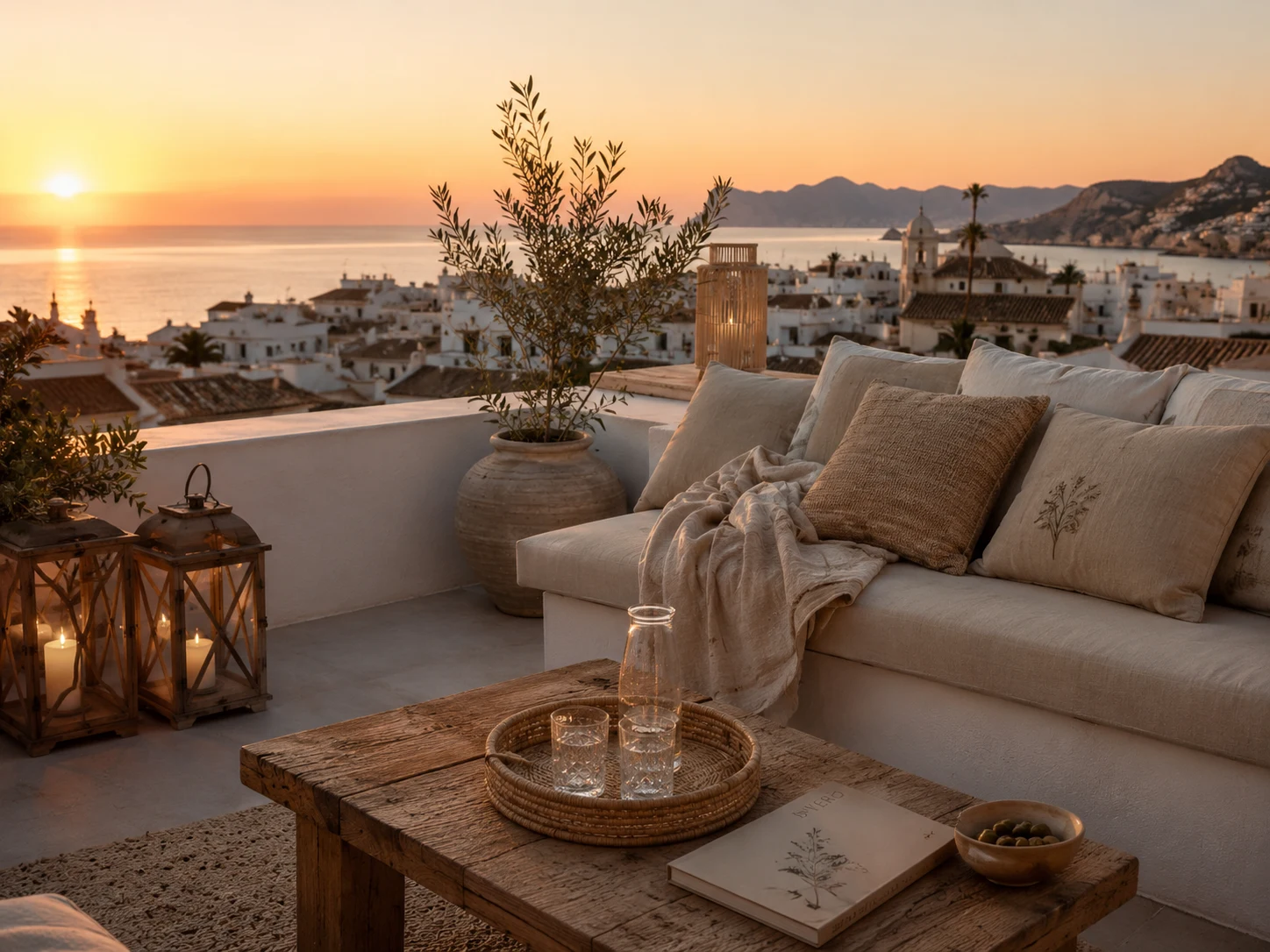
Property listings often highlight a south or south-west orientation. That is useful information, but it does not automatically tell you how much direct sun you will actually receive in December or January.
The low winter sun can be blocked by mountains, a facing hillside, tall trees, an apartment building or even your own pergola and roof overhang. Two homes with the same compass orientation can therefore feel completely different.
Look at the surroundings, not only the terrace
The Costa Blanca has substantial changes in elevation. A home in a valley or on the north side of a slope can lose the sun early in winter. A higher home may keep it much longer, but may also be more exposed to wind.
That is why we look not only at the direction of the façade, but at the home’s position in the landscape.
- Position in relation to mountains and surrounding hills.
- Height of nearby buildings and trees.
- Sun on the living room, terrace and pool — not just on the roof.
- The time at which the winter sun disappears.
- Wind and shelter on the terrace.
Ask for evidence if you buy outside winter
If you view in May, July or September, your eyes alone cannot tell you what January will feel like. Ask the seller or agent for photos or videos from December or January. Satellite imagery, sun-position apps and local experience can also help.
A better question than “does this home get winter sun?” is: “what time does the sun reach this terrace in January, and until what time does it stay?” That usually produces a more concrete answer.
Natural light indoors matters just as much
A home can have a sunny terrace and still feel dark inside. Look at window area, the depth of covered terraces, colours, layout and the orientation of the main living spaces.
If you plan to live here permanently or for several months each year, that can matter more than a spectacular view visible from only one corner of the terrace.
Make winter sun part of your search profile
If winter sun is essential to you, it should be a selection criterion from the start. Homes that look attractive on paper but do not work in practice can then be filtered out earlier.
That saves viewings and helps prevent falling in love with a property only to discover months later that the terrace is shaded from three in the afternoon.
Winter sun is not a small detail. For many buyers it determines whether a home feels good twelve months of the year.
byVERO PROPERTY FINDING
Would you rather not make these decisions alone?
We start with your situation, search with purpose and assess both the property and its surroundings critically.